Posts

Showing posts with the label aximmica

Mica: Allowing Industries with Cutting-Edge Insulation Solutions

Image
Be it the foundry and steel industry or aerospace and automotive sectors, insulation solutions are vital for all industries! These solutions ensure optimal working conditions, product quality, and worker safety by providing thermal, acoustic, and electrical insulation. Moreover, insulation also helps preserve equipment lifespan, prevent condensation, and maintain temperature - making it indispensable across various sectors. When it comes to electrical insulation, industries are constantly seeking advanced solutions that can meet their evolving needs. Mica, with its exceptional properties, has emerged as a game-changer in the field of electrical insulation. This blog post will explore the versatile applications of mica material as insulation in various industries - The Advantages of Mica Insulation High dielectric strength : Mica's high dielectric strength enables it to withstand high voltages, making it suitable for various high-voltage applications. Fire resistance: Mica insula...
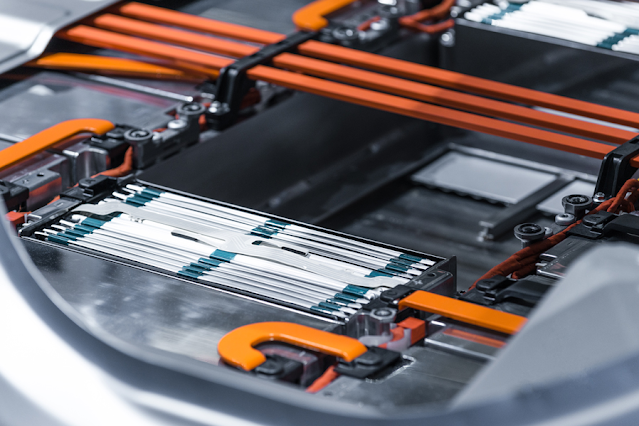
Top Uses of Mica Sheets in the Electrical Industry!

Image
Mica sheets  have long been an essential component of the electrical industry. These thin, flexible sheets are highly effective in preventing electrical sparks and short circuits, making them ideal for various electrical applications.  Mica sheets are well-known for their exceptional resistance to high temperatures, chemical corrosion, and electrical conductivity. They are frequently used in a variety of electrical applications, including transformers, capacitors, electric motors, and generators. To learn more about mica sheets and their use in the electrical industry, read the blog post below:  What are Mica Sheets? Mica sheets are thin, transparent, and highly heat-resistant sheets made from minerals. These minerals are naturally occurring minerals that are found in igneous, metamorphic, and sedimentary rocks.  These mica minerals are crushed into a fine powder and then combined with water to form a paste. The paste is then spread over a flat surface and allowed to...

Mica Sheets in Steel and Foundry Industries: Few Basic Things to Know!

Image
Mica is the most widely used mineral in industries since it is a naturally occurring element with high-performance and remarkable properties. The steel and foundry industries use mica sheets, a typical mica-based insulating product, for a variety of purposes. Due to its unique qualities, it is utilized in a wide range of applications, including electrical insulation, heat dissipation, and mechanical reinforcement. If you want to buy the best mica products for your steel and foundry industry, get in touch with Axim Mica. We meet our customer's requirements and provide on-time delivery, product warranties, and other services. Properties of Mica Sheets Thermal Stability: The thermal stability of mica sheets is excellent at high temperatures. When in pure form, they can endure temperatures of up to 1000 °C, and when built up, they can withstand temperatures of up to 1600 °C. Mica sheets are employed in many different thermal insulation applications, including the construction of mach...

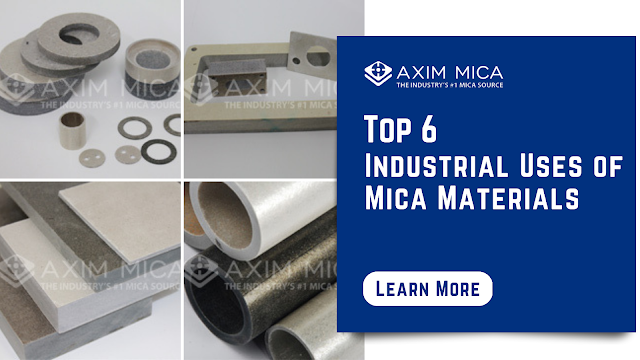
Top 6 Industrial Uses of Mica Materials

Image
Mica materials are a group of naturally occurring minerals known for their excellent insulation properties, high dielectric strength, and ability to withstand extreme temperatures and high pressure. They are typically composed of silicate minerals with a layered structure, with weak bonds holding the layers together. Mica materials are commonly found in granite, schist, and gneiss rock formations. They are mined and then processed to create various products used in industrial and electrical applications. Types of Mica Materials There are several types of mica materials, including muscovite, phlogopite, biotite, and Lepidolite. Muscovite is the most common type of mica and is often used in construction, electrical insulation, and as a filler in paint and rubber. Phlogopite is similar to muscovite but has a higher heat resistance and is often used in high-temperature applications. Biotite is a dark-colored mica commonly found in igneous and metamorphic rocks. Finally, Lepidolite is a...

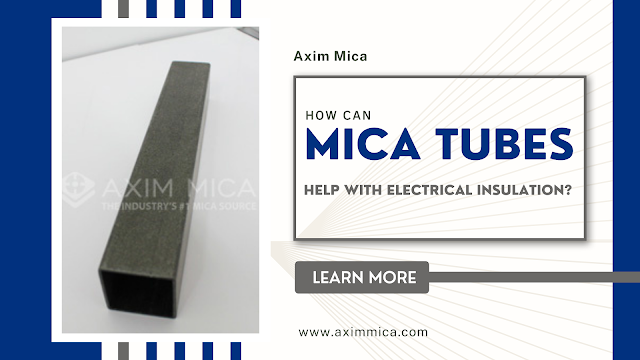
How Can Mica Tubes Help With Electrical Insulation - Axim Mica

Image
Mica has the potential to be used in a wide range of products and solutions because of its versatility. It can be molded and processed into a variety of forms and sizes for various uses in large-scale furnaces, consumer goods, and other industries. One of the most popular mica products that are widely used in industries is  mica tube . These are made of muscovite grade & phlogopite mica and ensure outstanding electric insulation and high heat resistance properties. In this blog post, we’ll learn more about mica tubes and understand their importance – Understanding Mica Tubes  Mica tubes are lightweight, durable, and combine electrical and mechanical strength. They are rigid but adaptable and available in a range of lengths, diameters, and thicknesses. As a result, it is easy and beneficial to use them for various industrial applications. Here we are sharing more about the three uses of mica tubes for electrical insulation.    ·      ...

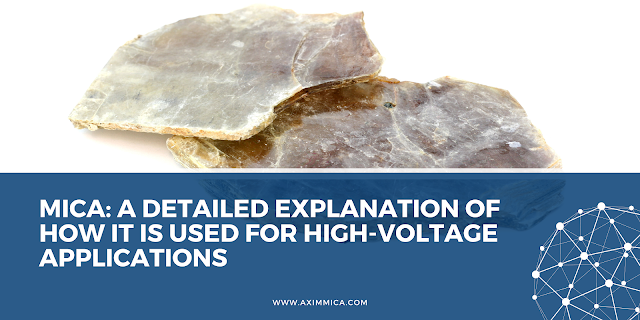
Mica: A Detailed Explanation of How it is Used for High-Voltage Applications

Image
High voltage usage demands a specialized and stable material for the process of insulation. High voltages can compromise a complete circuit and the safety of users and operators if not handled properly. Hence a stable material is necessary for suitable high-voltage electric insulation. There are numerous high-voltage applications where mica is used. Let’s take a look at them and a couple of examples of how mica is used. The electrical properties of mica Mica holds superior electrical properties in comparison to other common electrical insulation materials . Mica has the capacity to withstand up to 2000 kilovolts per mm of material before breaking down. It also has the capacity to withstand high temperatures. Pure mica has the ability to withstand up to 900°C, and when it gets laminated with other materials can even withstand up to 1600°C. Additionally, mica also has a high rate of permitivity. High voltage applications of mica The physical and electrical properties of...